 ქართული
 русский
Decree No. 41: What the Law Requires for Fire Safety in Buildings
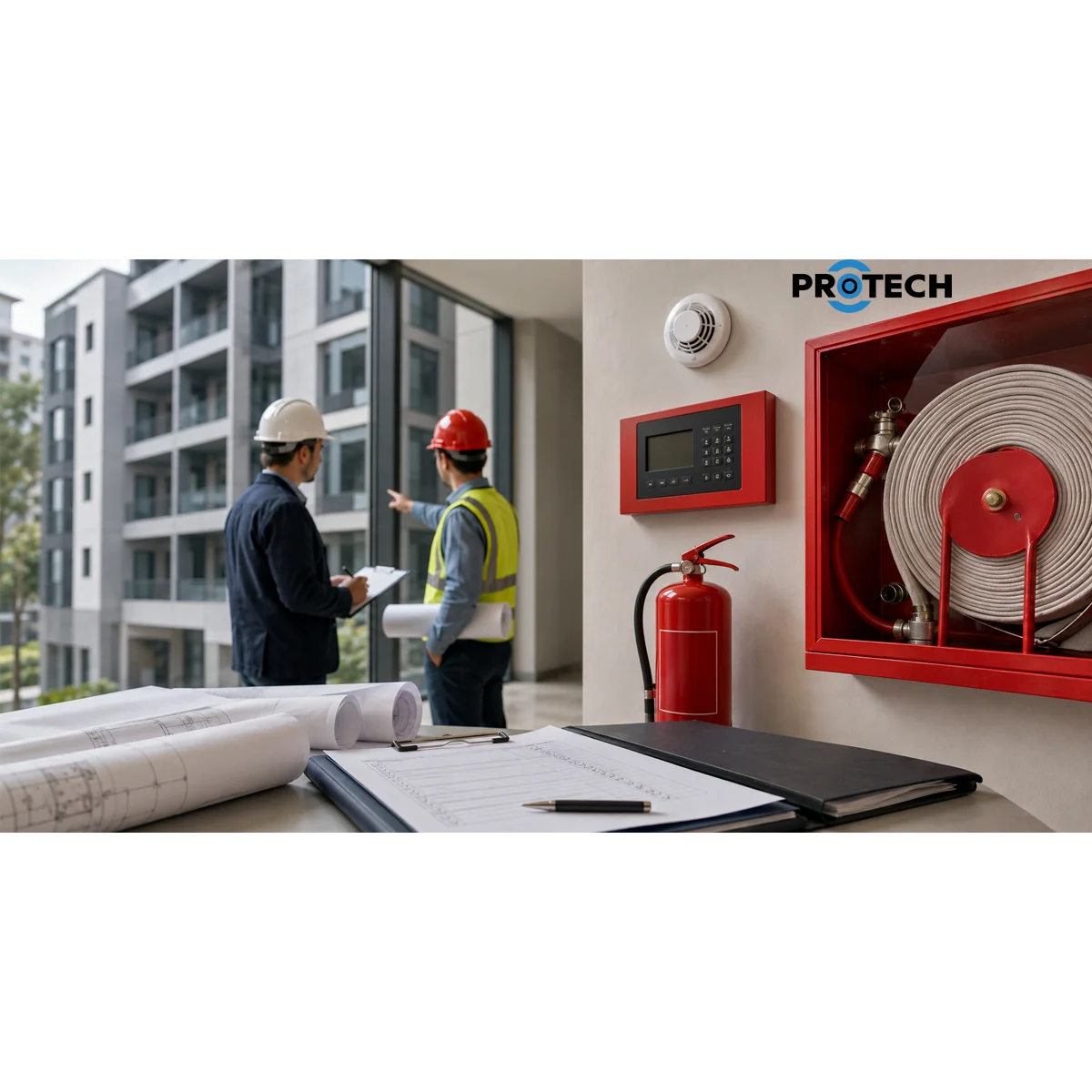
Decree No. 41, currently in force in Georgia, sets out a number of important safety requirements for buildings and structures — including matters related to fire safety.
In practice, one of the key problems that arises when a facility is handed over is non-compliance with fire safety requirements. Cases in which the design documentation does not match the actual condition of the facility deserve particular attention.
Which violations occur most often?
First — a mismatch between the design and the actual condition.
In practice, it is common to find cases where the fire safety systems have not yet been installed at the facility, while the submitted design does not correspond to the actual situation. In such cases, questions of design compliance and approval require additional verification, which complicates the handover of the facility and makes it difficult to determine the scope of work in advance.
Second — malfunctioning or incompletely executed systems.
Fire alarm, smoke extraction, and ventilation systems must operate properly. Simply installing a system is not enough — it is essential that every required component is properly installed and that the system actually performs its function.
Third — neglecting technical maintenance.
For a fire safety system to operate reliably, it requires periodic inspection, testing, and technical maintenance. If this process is not carried out over a long period, a fault in the system may only come to light during an inspection.
What risks might you face?
If a violation is identified, the outcome depends on the specific circumstances and may include a requirement to correct the fault, corresponding administrative liability, or other measures.
For new facilities, the issue is even more significant: non-compliance with safety requirements may also affect the process of putting the facility into operation.
For an operating business, a faulty or non-compliant fire safety system is not only a risk of a fine — first and foremost, it concerns people's safety. That is why it is important to identify and correct potential faults in good time.
How does Protech help facilities?
In our experience, identifying faults early and correcting them step by step is far more effective than discovering the problem only during an inspection.
To this end, we begin by assessing the facility's current condition — we inspect the systems and the design documentation and determine which faults need to be corrected and which issues require additional attention. Where necessary, we carry out engineering design, bring the systems into order, and prepare the relevant documentation.
We also provide periodic technical maintenance and system inspections, so that the systems remain in proper working condition at all times.
Installing a fire safety system is only the first step. What matters is that it is executed correctly and operates reliably.
If you would like to assess your facility's condition in advance and identify potential problems, get in touch — the Protech team will help you evaluate the current situation and define the next steps.